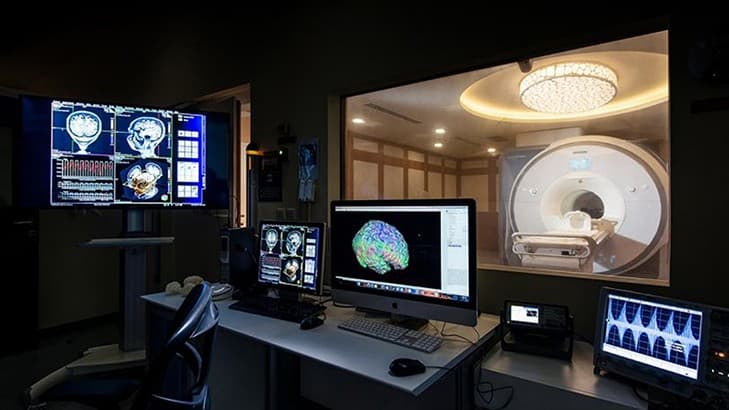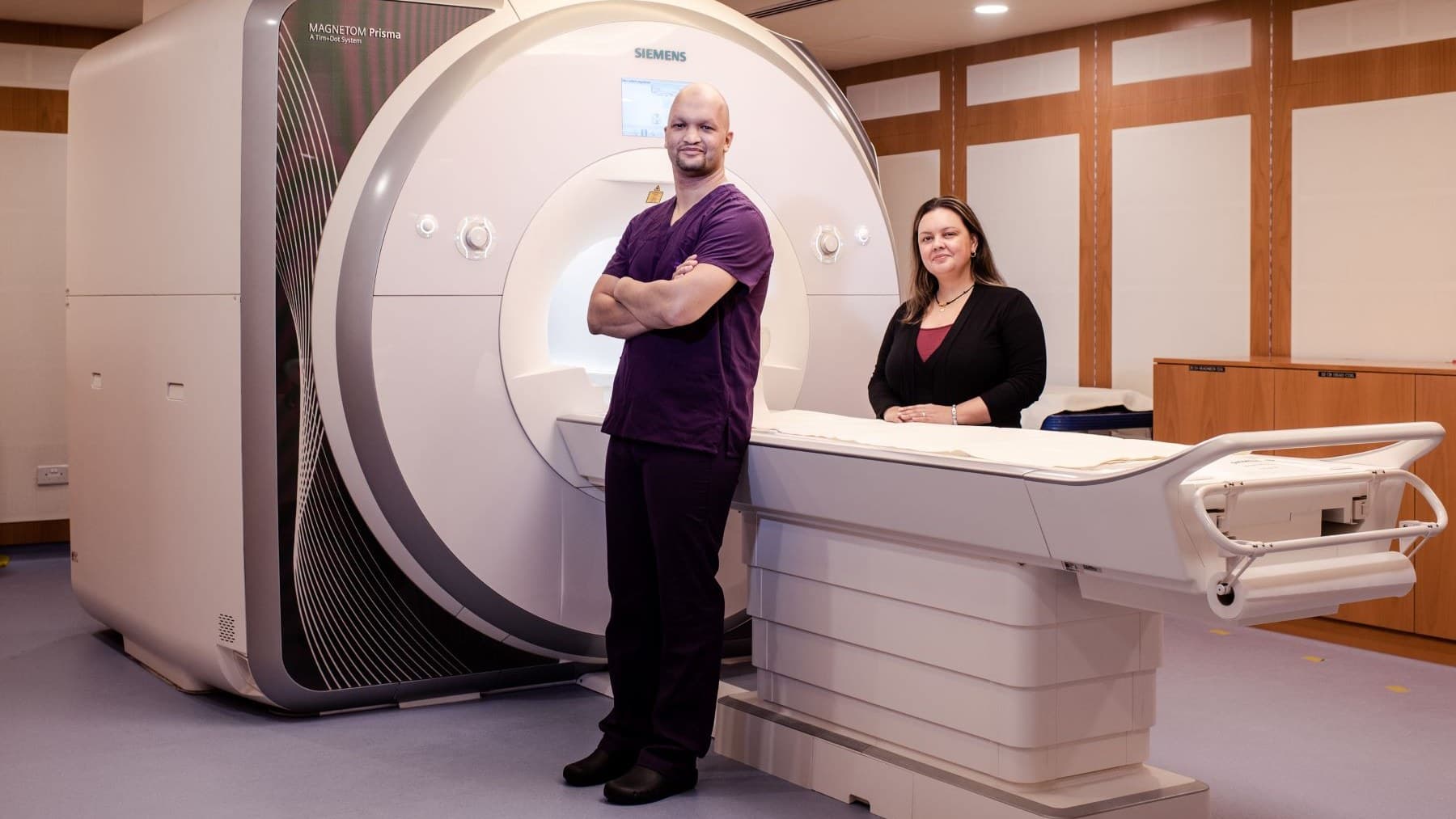
In May 2025, Middle East Health published a feature by Dr Osama Abdullah of NYU Abu Dhabi’s Center for Brain and Health. It describes the LAMINATE study, a collaboration between the Center for Brain and Health, Cleveland Clinic Abu Dhabi and Yas Clinic that aims to create a streamlined and standardised way of assessing MS progression through MRI.
The problem
The article explains that diagnosing and monitoring MS relies heavily on MRI to find lesions and to follow changes in brain volume over time. Even in advanced healthcare systems this remains time-consuming, often subjective and dependent on specialist expertise. It adds that the challenge is especially pressing in the UAE, where MS prevalence is estimated to be nearly double the global average.
What LAMINATE does
According to the article, LAMINATE helps uncover subtle changes that might otherwise go unnoticed, such as new or enlarging lesions and early signs of brain atrophy. It is built on a curated dataset of over 150 MS patient scans, collected and manually labelled with Cleveland Clinic Abu Dhabi and Yas Clinic.
For clinicians, the article describes LesionView, an interface for reviewing lesion clusters, validating segmentation results and generating customised reports.
Where it stands
At the time of writing, the article says the system is in active use at Cleveland Clinic Abu Dhabi, with rollout underway at Yas Clinic and plans to extend to more hospitals in the region. The author also points to possible uses in neurodegenerative conditions such as Alzheimer’s disease and other dementias, in stroke recovery, and in oncology.
He credits the National MS Society UAE, whose support has let the project move from an academic proof of concept into clinical deployment.
Read the full feature on Middle East Health.
Cover photo: Middle East Health.